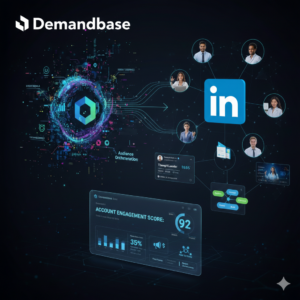
The evolution of modern business-to-business marketing has culminated in the transition from broad-spectrum lead generation to the sophisticated discipline of Account-Based Experience (ABX). Central to this transformation is the integration of Demandbase, an enterprise leader in Account Intelligence, with LinkedIn, the undisputed epicenter of professional engagement. This integration does not merely represent a tactical connection between two platforms but rather a fundamental architectural alignment that allows go-to-market teams to identify, engage, and close high-value accounts with unprecedented precision. By unifying first-party data, third-party intent signals, and the professional graph of LinkedIn, organizations can move beyond the limitations of individual lead-based tracking to address the collective behavior of buying committees.1
Technical Foundations of the Demandbase-LinkedIn Integration
Establishing a robust integration between Demandbase and LinkedIn is the prerequisite for any sophisticated account-based marketing strategy. This process is governed by specific administrative protocols designed to ensure data security, administrative oversight, and seamless bidirectional communication. The integration functions primarily by allowing Demandbase to act as a centralized Audience Management hub that pushes dynamic account and people lists directly into LinkedIn Campaign Manager.2
Administrative Prerequisites and Permission Hierarchies
The setup of the Demandbase-LinkedIn connector requires a convergence of administrative privileges across both ecosystems. Within the Demandbase environment, the individual initiating the integration must possess Edit rights for the Integrated Systems section under Settings. This level of access ensures that only authorized personnel can establish data pipelines that involve sensitive first-party customer information.3 On the LinkedIn side, the integration user must be assigned an Admin role with Write permissions in the LinkedIn Campaign Manager. Specifically, roles such as Billing Admin, Account Manager, or Campaign Manager are required to grant Demandbase the ability to create and manage audiences programmatically.3
The technical mechanism of this connection relies on OAuth authentication. Once the credentials are provided and the level of permission is reviewed and allowed, Demandbase generates an access token. It is critical for practitioners to note that this access token remains valid for exactly one year. The platform proactively notifies users when the token is nearing expiration, at which point a re-authentication process must be completed to prevent the disruption of audience syncing.3
| Integration Component | Administrative Requirement | Functional Role |
| Demandbase Integrated Systems | Edit Rights | Configuration of third-party data pipelines.3 |
| LinkedIn Campaign Manager | Billing Admin / Account Manager | API Write access for audience management.3 |
| Authentication Type | OAuth 2.0 | Secure token-based platform communication.3 |
| Token Lifecycle | 365 Days | Requires annual renewal to maintain sync.3 |
| Sync Enablement | Toggle: Automatically Sync | Enables 3rd-party campaign reporting ingestion.3 |
The Mechanism of Audience Orchestration
Once the integration is active, Demandbase provides a sophisticated interface for managing LinkedIn “Destinations.” The platform allows marketers to send both Account Audiences and People Audiences to LinkedIn, where they appear as Matched Third-party Audiences.6 This process is highly versatile, offering three distinct logic paths for audience creation. The “Create New” option establishes a fresh segment for specific campaign needs. The “Create New and Replace” logic is particularly useful for iterative campaigns, as it allows Demandbase to establish a new audience and substitute it for one currently in use, ensuring that the most recent intent data is reflected in active targeting.6 The “Use Existing” option provides a mechanism to overwrite audiences previously created via the integration, maintaining a clean architectural footprint within the LinkedIn Campaign Manager.6
A critical second-order insight regarding this mechanism is the latency associated with professional graph matching. While Demandbase can push data near-instantly, LinkedIn requires a processing window, typically ranging from 24 to 48 hours, to resolve the identifiers (such as hashed emails or company domains) into its member profiles.4 For larger audiences exceeding 50,000 members, this processing time can extend beyond 48 hours. Strategic planning must, therefore, account for this delay to ensure that time-sensitive intent signals are not lost to the technical processing lag of the platform.4
Strategic Segmentation and Account Intelligence
The efficacy of LinkedIn ABM is directly proportional to the quality of the intelligence driving the targeting. Demandbase distinguishes itself by providing “Account Intelligence,” a multi-dimensional data set that combines firmographics, technographics, and intent signals to define the Ideal Customer Profile (ICP).2
The ICP and Qualification Scoring
At the core of a high-performing ABM program is the Qualification Score, a machine-learning-derived value that evaluates how closely a prospect account mirrors an organization’s most successful past customers. The calculation of this score involves analyzing a set of at least 50 to 100 past customers across several vectors.8 Firmographic data, including country, industry, revenue range, and employee count, provides the structural fit. Technographic data identifies the prospect’s current technology stack, ensuring the organization’s solution is compatible or addresses a specific gap in their infrastructure.8
The historical intent component of the score analyzes the past year of research behavior across 62,500+ B2B keywords.8 This creates a nuanced prioritization model where accounts are categorized into tiers of likelihood:
- Highly Likely (Score >= 95)
- Likely (Score >= 50 and < 95)
- Unlikely (Score < 50) 8
| Scoring Factor | Data Origin | Strategic Implication |
| Firmographics | Demandbase Database (55M+ Accounts) | Ensures basic market and structural fit.8 |
| Technographics | Installed Tech Stack Analysis | Identifies competitive or complementary software presence.8 |
| Intent Signals | Bombora, G2, TrustRadius, TechTarget | Captures active research and purchase interest.10 |
| Recency/Decay | Time-Based Weighting | Prioritizes current activity over historical engagement.11 |
Intent-Based Targeting and Surge Signals
Beyond static fit, the integration excels in its ability to operationalize “Intent Surges.” When an account demonstrates a statistically significant increase in research activity around specific topics—such as “ABM implementation” or a competitor’s name—Demandbase captures this surge and can automatically trigger the account’s inclusion in a LinkedIn campaign.9 This ensures that the organization’s messaging reaches the prospect at the “magical moment” when they are actively seeking solutions.14
The integration of first-party intent (visits to the organization’s pricing page or product documentation) with third-party intent (research on external forums) allows for a “surround sound” targeting strategy. If an IT Manager from a target account visits a pricing page while the CFO is researching ROI models on an external site, Demandbase unifies these disparate signals into a single Account Engagement Score, flagging the account as highly active and ready for a multi-threaded ad campaign.10
Paid Advertising Options: The LinkedIn Ad Format Matrix
LinkedIn provides a comprehensive suite of advertising formats that, when combined with Demandbase’s account-level targeting, allow for highly personalized full-funnel experiences. Each format possesses distinct performance characteristics and is suited for specific stages of the buyer journey.16
Thought Leader Ads: The Performance Powerhouse
Thought Leader Ads (TLAs) have revolutionized LinkedIn advertising by sponsoring posts from individual profiles rather than corporate company pages.18 This format leverages the fundamental reality that B2B decision-makers trust people significantly more than logos. According to the 2024 Edelman-LinkedIn B2B Thought Leadership Impact Study, 73% of decision-makers view thought leadership as a more trustworthy basis for assessing capabilities than standard marketing materials.18
Performance data for TLAs is compelling. They deliver a median CTR of 2.68%, which is approximately six times higher than the 0.42% seen in traditional single-image ads.18 Furthermore, TLAs provide an Efficiency Score of 9.5, the highest among all LinkedIn ad formats, with a median CPC of $2.29.18 The strategic implication of this format for ABM is profound: by sponsoring the CEO’s or a product expert’s personal insights, the organization can build a deep level of authority within a target account committee before a salesperson ever makes contact.18
| Ad Format | Median CTR | Median CPC | Efficiency Score |
| Thought Leader Ads | 2.68% | $2.29 | 9.5 18 |
| Single Image Ads | 0.42% | $13.23 | 3.2 18 |
| Carousel Ads | 0.32% | $13.30 | 2.4 18 |
| Video Ads | 0.24% | $15.61 | 1.5 18 |
Document Ads: Educational Nurturing at Scale
Document Ads allow marketers to share multi-page PDFs, guides, and reports directly in the LinkedIn feed, enabling users to swipe through content without clicking away.19 For ABM, this format is indispensable for middle-funnel nurturing. It allows organizations to share deep technical insights or ROI frameworks that a prospect can consume at their own pace.
The “Gating Strategy” for Document Ads is a critical tactical decision. Ungated documents maximize brand authority and reach, while gated documents, utilizing LinkedIn’s Lead Gen Forms, are superior for capturing specific contact data.19 Document Ads see an average engagement rate of 1.8%, roughly four times higher than typical formats, and conversion rates as high as 13% when paired with native Lead Gen Forms.19 Furthermore, Demandbase can track the “Depth of Consumption,” providing a high-intent signal if a stakeholder from a target account views 75% or more of a 10-page report.19
Interactive Formats: Conversation and Message Ads
Inbox-based advertising provides a direct line of communication to key decision-makers. Message Ads are single, focused messages with a primary CTA, best used for simple, high-intent offers like webinar invitations or executive outreach.21
Conversation Ads, conversely, utilize a “choose-your-own-adventure” model, offering multiple response paths within a single message.21 This format is particularly effective for segmenting interest or handling objections within the flow of the conversation. For example, a Conversation Ad might ask, “How can we help you today?” with buttons for “See Pricing,” “Read Case Studies,” or “Speak to an Expert”.21 In an ABM framework, the choice a prospect makes is itself a valuable intent signal that Demandbase captures and pushes back to the CRM, informing the next step in the sales sequence.19
Visual and Awareness Formats: Video, Carousel, and CTV
Video Ads are excellent for storytelling and demonstrating product functionality. For optimal ABM results, videos should be kept between 15 and 60 seconds and must include captions, as they typically autoplay on mute.17 Carousel Ads allow for sequential storytelling or the showcasing of multiple product features in a single unit, encouraging interactive swiping.16
A burgeoning area in LinkedIn’s paid suite is Connected TV (CTV) Ads. These allow organizations to move their ABM messaging from laptop screens to the large screen of smart TVs, reaching decision-makers on high-quality streaming platforms.16 This provides premium brand visibility and enhances the perceived authority of the brand among enterprise accounts.25
Organic LinkedIn ABM and Employee Advocacy
While paid advertising provides precise reach, organic strategies build the long-term credibility and social proof required to win in competitive markets. Organic ABM on LinkedIn centers on two pillars: the Company Page and individual Employee Profiles.26
The Power of Profile-Based Marketing
Personal LinkedIn profiles generate significantly more reach and trust than corporate pages. In an ABM context, the profiles of the sales team, executives, and SMEs are essentially specialized landing pages for target account members.27 A high-performing ABM profile should feature an optimized headline that moves beyond a title to a value statement, an About section focused on client outcomes rather than a biography, and Featured Media showcasing relevant case studies or LinkedIn Live recordings.27
Employee Advocacy programs train and encourage staff to amplify company content and engage authentically with the posts of target account decision-makers. This “multi-threaded engagement” ensures that the brand has multiple human touchpoints within a single account.26 Senior executives are five times more likely to respond to a peer-level reach-out from another executive than to a direct sales approach, making “Executive Advocacy” a cornerstone of 1:1 ABM strategies.28
Company Page Strategy and Social Selling
The corporate company page serves as the professional home of the brand on LinkedIn. Beyond basic updates, organizations should utilize Showcase Pages for specific products or industries to provide targeted content for different account segments.26 Monitoring the followers and engagers of these pages allows marketing to identify “unaware” accounts that are starting to show interest.15
Social Selling techniques, primarily utilizing LinkedIn Sales Navigator, allow sales teams to identify key decision-makers and find the best path for an introduction, such as mutual connections or shared alumni networks.26 “Trigger events,” such as a target account executive changing jobs or a company announcing a merger, serve as the perfect entry point for timely, relevant outreach.26
Integrated ABM Playbooks: Acceleration and Orchestration
Orchestration is the sequencing of activities across multiple channels to create a unified buyer experience. Demandbase and LinkedIn enable high-impact plays that ensure marketing and sales are moving in lockstep.14
The “Surround Sound” Awareness Play
For Tier 3 or programmatic accounts, the goal is to create broad brand awareness within the ICP. This play involves:
- Audience Push: Syncing a list of 1,000+ ICP accounts to LinkedIn.31
- Multichannel Ads: Running a mix of Video and Single Image ads to these accounts to build a baseline of familiarity.16
- Website Identification: Using Demandbase to identify which of these accounts are visiting the site as a result of the ads, even if they don’t fill out a form.15
- Sales Intelligence: Passing these visitor reports to sales, allowing them to prioritize their outbound efforts toward the most active accounts.13
The Pipeline Acceleration Play
For Tier 1 or 2 accounts with open opportunities, the focus shifts to increasing deal velocity and preventing stagnation. This “Acceleration” playbook involves:
- Precise Segmentation: Creating a dynamic list in Demandbase specifically for “SQL Opportunity” or “Pipeline Opportunity” stages.33
- Validation Content: Serving LinkedIn ads that feature analyst reports, ROI calculators, or third-party validation to justify the investment to the broader buying committee.33
- Executive Alignment: Triggering a C-level to C-level LinkedIn message or direct mail piece for Tier 1 accounts to open doors at the highest level.1
- SDR Coordination: Real-time Slack or Teams alerts notify the account owner when a key stakeholder from an “Acceleration” account engages with an ad, allowing for immediate, personalized follow-up.10
The “Wake-the-Dead” Play
For accounts that have stalled in the funnel, the orchestration play focuses on re-engagement.
- Stalled Account Trigger: Demandbase identifies accounts that haven’t engaged in 30+ days despite having an open opportunity.30
- New Messaging Angle: Launching a LinkedIn retargeting campaign with a completely different creative angle—for example, a new product feature or a high-value customer success story.30
- Incentivized Conversation Ads: Using Conversation Ads to offer a specific incentive, such as a workshop or a free audit, to restart the dialogue.21
Measurement and the ROI of Integrated LinkedIn ABM
Measuring ABM success requires a fundamental shift from counting individual leads to measuring account-level influence and progression. Demandbase provides the unified dashboarding required to prove the revenue impact of LinkedIn efforts.9
Account Engagement Scores and MQA Trends
Instead of looking at isolated ad clicks, the Account Engagement Score provides a longitudinal view of how an account is interacting with the brand. This score aggregates website visits, ad impressions, email opens, and webinar attendance into a single trend line.11 A “Marketing Qualified Account” (MQA) is triggered when this score crosses a specific threshold, signaling to sales that the account is “hot” and ready for a conversation.12
The effectiveness of these scores is measured through “Win Rate by Score Tier.” If accounts in the highest score tier convert at twice the rate of those in lower tiers, the model is validated.12 Furthermore, “Sales Cycle Length” is tracked to see if integrated LinkedIn ABM is shaving time off the average deal duration.12
Attribution and Pipeline Influence
Standard attribution models often overlook the “silent” influence of ad impressions. Demandbase’s “Deal Story” unifies every marketing and sales touchpoint, showing that while a procurement manager filled out the final form, the VP of Finance had been viewing Thought Leader Ads for three months prior.15 This “Influence Reporting” allows marketers to claim credit for the 20–35% of total pipeline typically influenced by LinkedIn in mature ABM programs.26
The ROI calculation for an ABM campaign must factor in the Total Cost of ABM, which includes direct spend, software fees, and employee overhead.32
A healthy benchmark for “MQA-to-Opportunity” conversion is 60–80%, indicating that marketing is passing high-quality signals that sales finds valuable.12
Advanced Optimization: Overcoming Common Pitfalls
Even the most well-designed ABM programs can falter due to technical oversights or a lack of cross-functional alignment. Practitioners must be vigilant against the “default landmines” of the LinkedIn platform.
Preventing Targeting Leakage
LinkedIn’s default settings are often designed to maximize reach rather than precision. Features such as Audience Expansion, which automatically adds “similar profiles” to a campaign, can dilute the account list with non-ICP prospects.36 Similarly, the LinkedIn Audience Network (LAN) places ads on third-party sites where the context may not be professional. Expert consensus is to disable both Audience Expansion and LAN for pure ABM campaigns.36
“Accelerate Mode,” an AI-powered delivery setting, removes control over specific targeting variables. For intentional ABM, “Classic Mode” is recommended, as it allows the marketer to maintain strict control over which accounts see which ads.16
Data Hygiene and CRM Alignment
The performance of the Demandbase integration is fundamentally dependent on the quality of the CRM data. If account records are incomplete, outdated, or poorly standardized, the intelligence engine will generate “false positives” or miss critical intent surges.38 Organizations must commit to continuous data validation and establish clear guidelines for how sales reps log their activities.11
| Pitfall | Operational Impact | Solution |
| Audience Expansion | Wasted spend on non-ICP profiles | Disable setting in Campaign Manager.36 |
| Poor Data Hygiene | Inaccurate intent and fit scoring | Regular CRM cleanup and enrichment.38 |
| Disconnected SDRs | Missed “magical moments” | Automated Slack/Teams intent alerts.13 |
| Lead-Centric KPIs | Failure to prove ABM impact | Shift to MQA and Influence metrics.15 |
Conclusion: The Future of Integrated Account-Based Experience
The strategic synergy of Demandbase and LinkedIn is not a static state but an evolving frontier. As we move further into 2026, the introduction of “Agentic” AI workflows, such as Demandbase’s Agentbase, will further automate the orchestration of high-impact plays.15 These AI agents will be capable of autonomously identifying an account surge, selecting the most relevant creative, and triggering a personalized reach-out from an executive—all while humans provide the strategic oversight and authentic connection.
The definitive guide to LinkedIn ABM is, ultimately, a guide to professional relationships at scale. By leveraging Demandbase’s account intelligence and LinkedIn’s social graph, organizations can transition from “interruptive” marketing to “integrated” experiences that treat the buyer with respect and deliver value at every touchpoint. Success in this domain requires a commitment to technical excellence, creative authenticity, and an unwavering focus on the accounts that truly matter.